
The field, redrawn
Version 19 threw away the renderer and started again with one rule, that everything on screen shares a single pixel grid. Here is what that changed.
By version 18 the field had a problem that more art couldn't fix. Each sprite was authored at its own resolution and then scaled to fit, so a derrick was made of fat pixels, a worker of thin ones, and a helicopter of something in between. Owning twenty pumpjacks stacked five of them on top of each other and added a "×20" badge. A camera panned across a world wider than the screen, and during a session it zoomed in far enough that the scene stopped reading as a place.
Version 19 replaced the renderer. The new one follows a short list of rules.
One pixel grid
The whole field is drawn into a small buffer, about 200 pixels tall, and that buffer is scaled up to the screen by a whole number. Nothing is drawn at any other scale. A pixel on the derrick is the same size as a pixel on a hard hat.
That in turn needs one ruler. A worker is 10 pixels tall, about 1.8 metres. A barrel is 5. A haul truck is 16. A pumpjack is around 30 and the main derrick around 130. Sizes come from that ruler and nothing is nudged by eye to fit a gap.
Depth instead of a camera
The field is now a single fixed view with a horizon. The drill site sits in the foreground where the crew works. Pumpjacks fill rows that recede toward the mesas, each row smaller than the one in front. Extra rigs stand off to the left, the refinery and its tank farm to the right, the pipeline across the far field. Buy something that floats and the right side of the horizon becomes a coastline.
Every building gets its own place to stand. Owning more of something fills more of the field, which is the whole point of buying it.
Structures are code
Most of what you see isn't a sprite sheet. The derrick is a function that draws two legs, a set of girts and the cross-bracing between them, at whatever height it's asked for. The same function draws the small rigs in the distance. Pumpjacks are drawn the same way, which is why they can nod: the beam is a line whose angle changes, with the horse head, the counterweight and the polished rod following it.
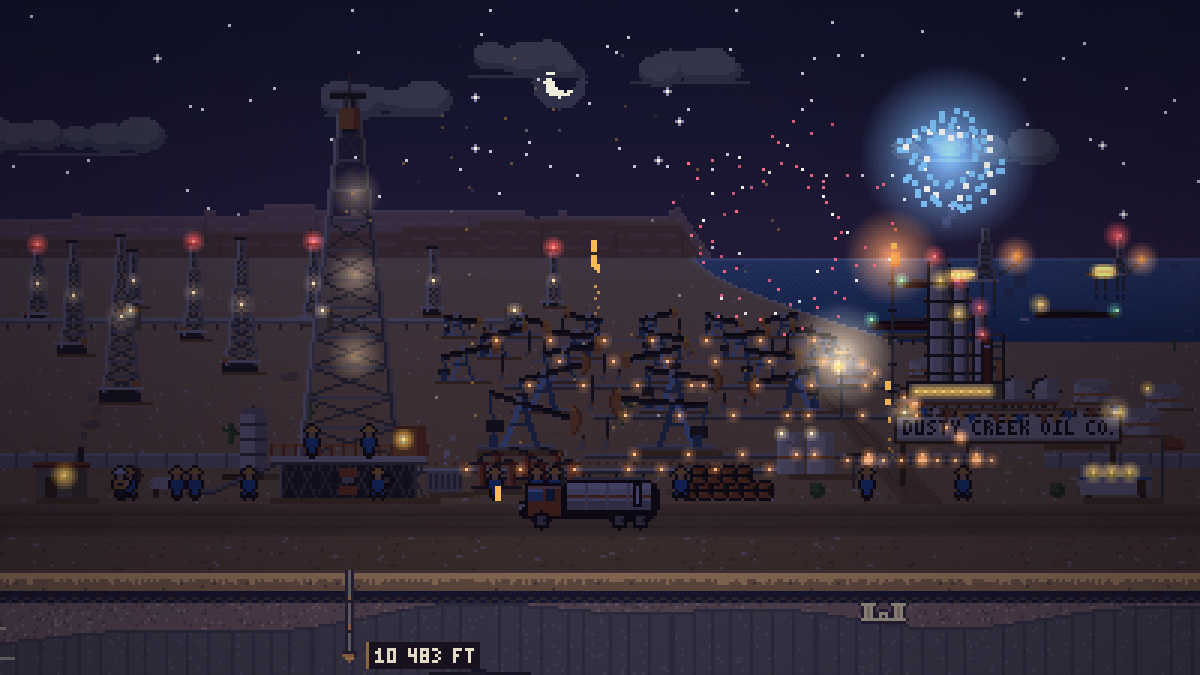
Drawing in code makes some things cheap. Upgrades change the machinery (a heavier counterweight, a longer beam, a blue-steel frame at the top tier), and lights can register themselves as they're drawn, which matters at night.
A day in fifteen minutes
The sky runs through a full day every fifteen minutes. The world is drawn once in neutral daylight and then tinted toward the hour, and lights are added on top after dark, so nothing needs a second set of art.
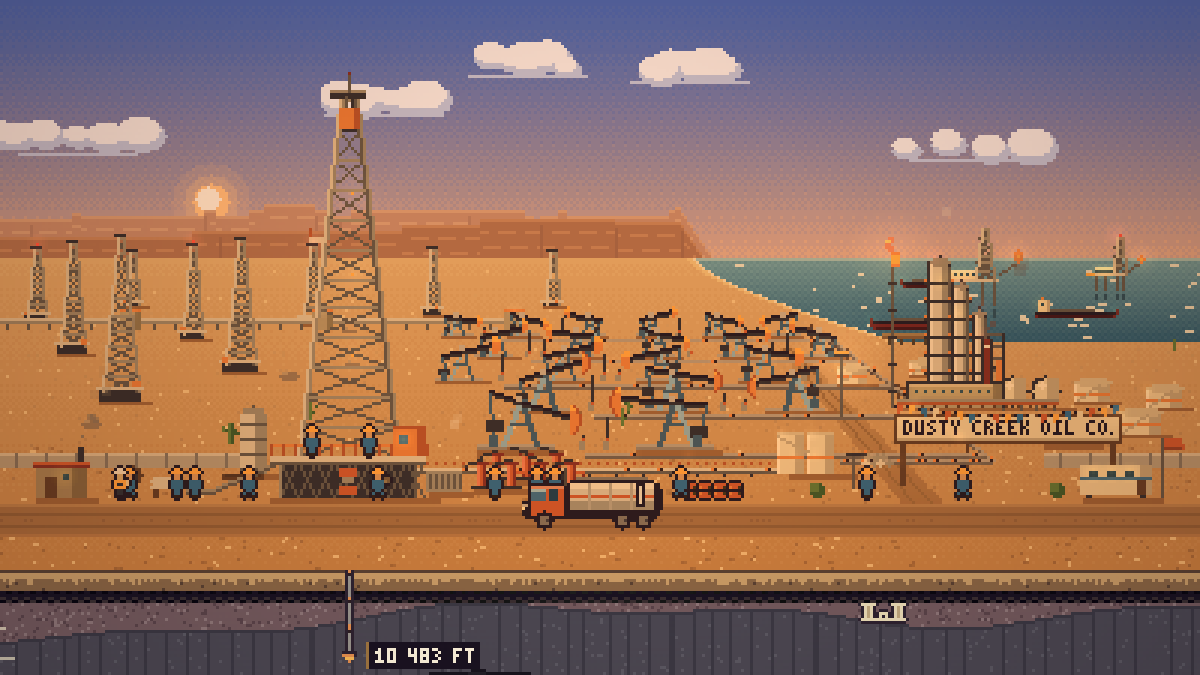
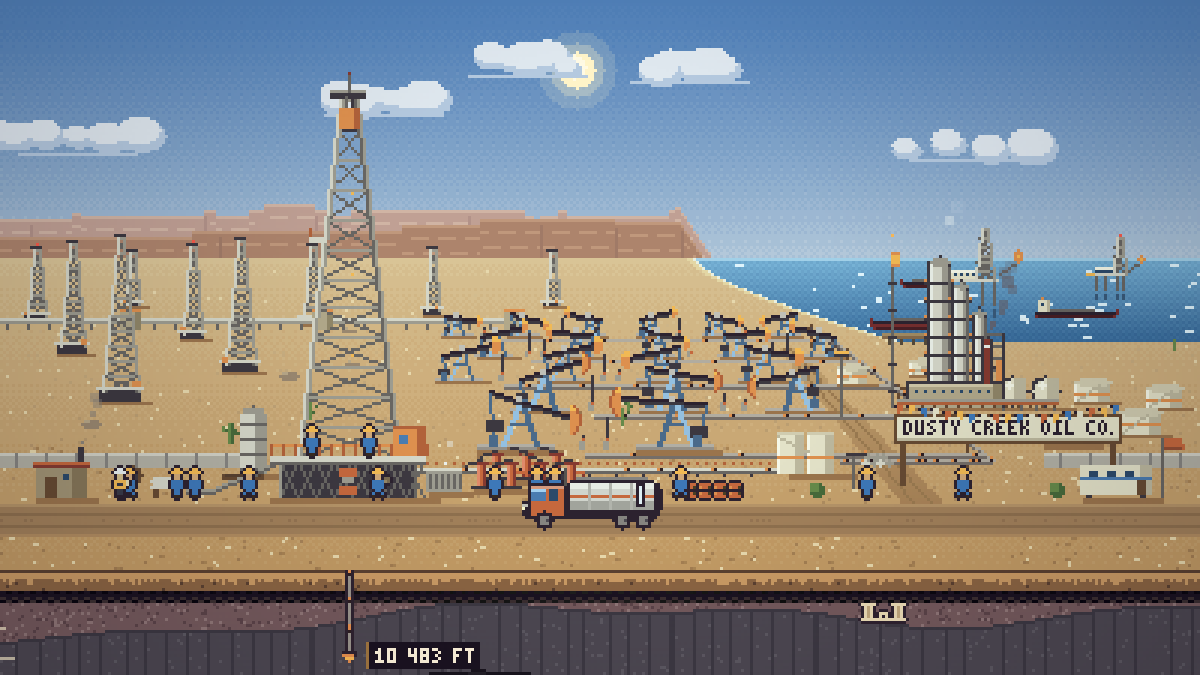
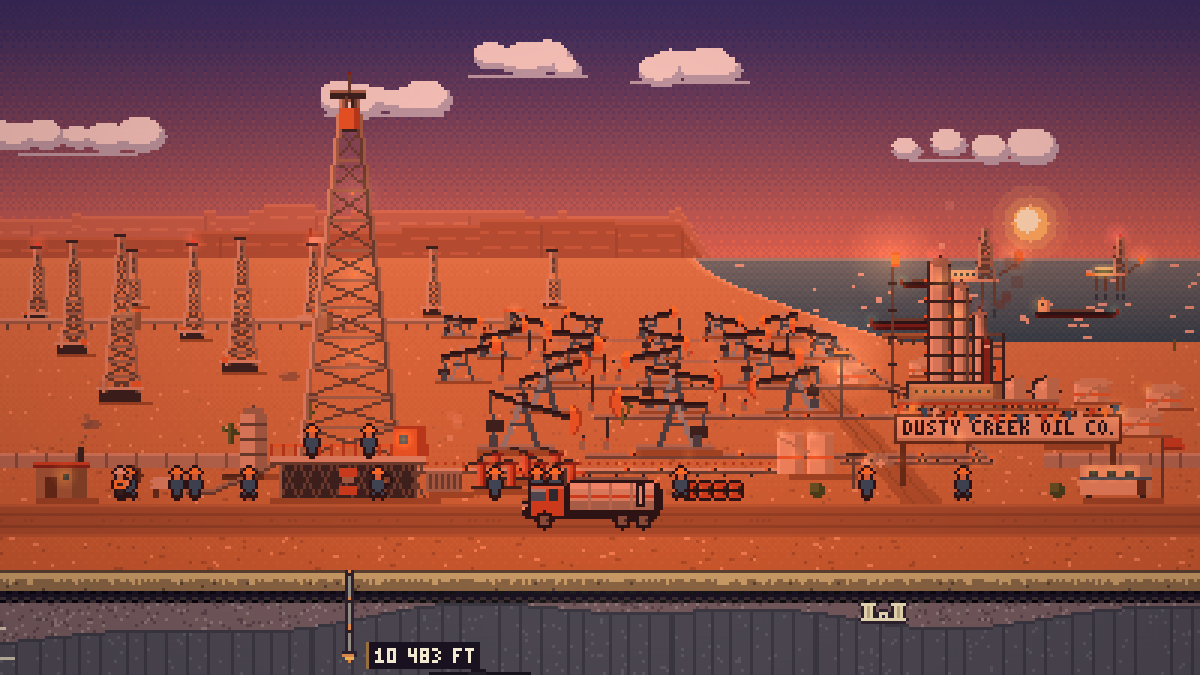
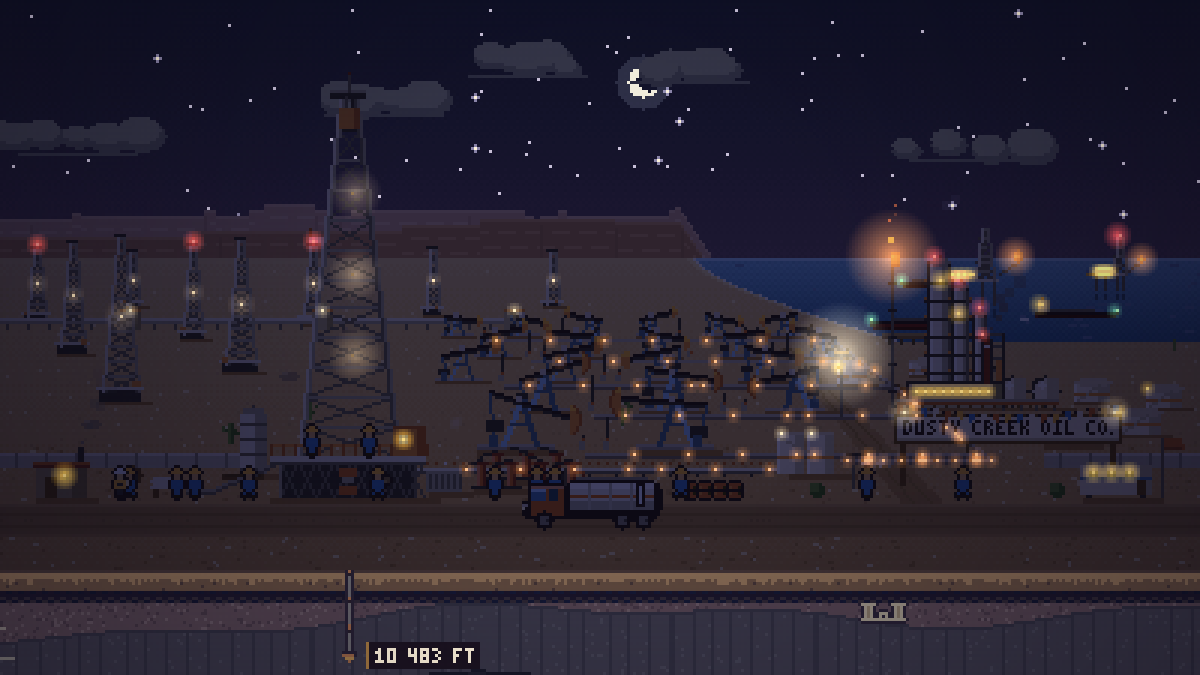
Pumpjacks only move while a session is running. Stop the clock and the field goes still, with the flares burning low.
Weather and occasions
There are sandstorms, rarely, and dust devils more often. In December and January the desert gets snow. None of it changes the numbers.
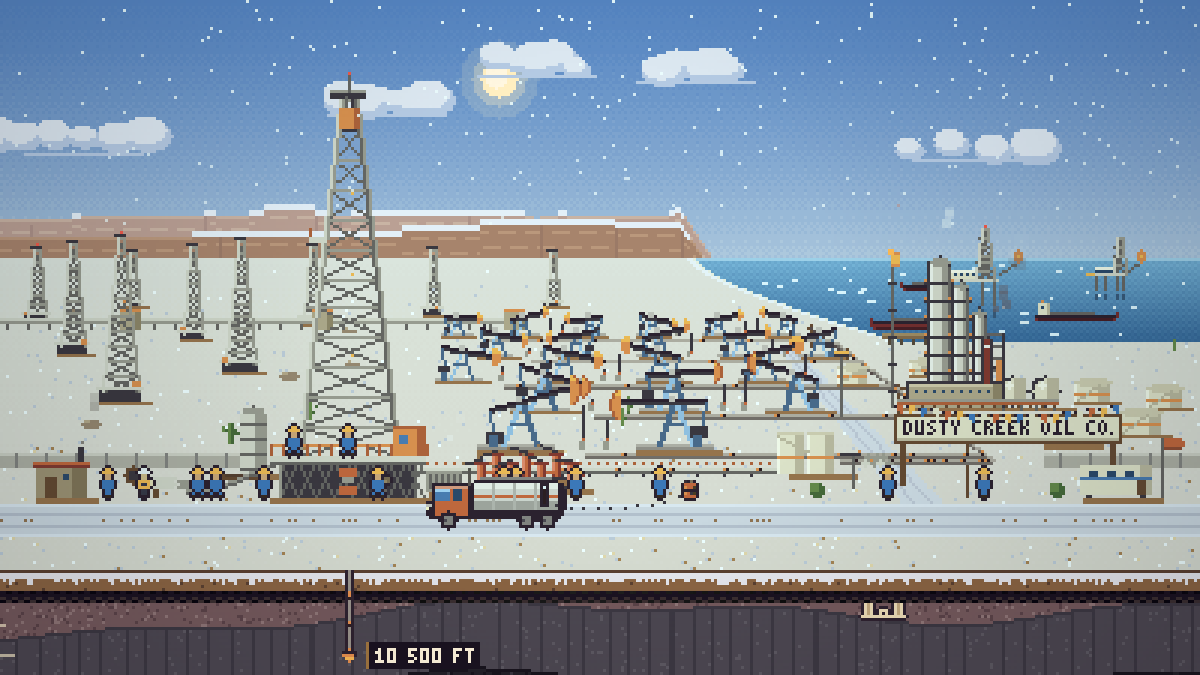
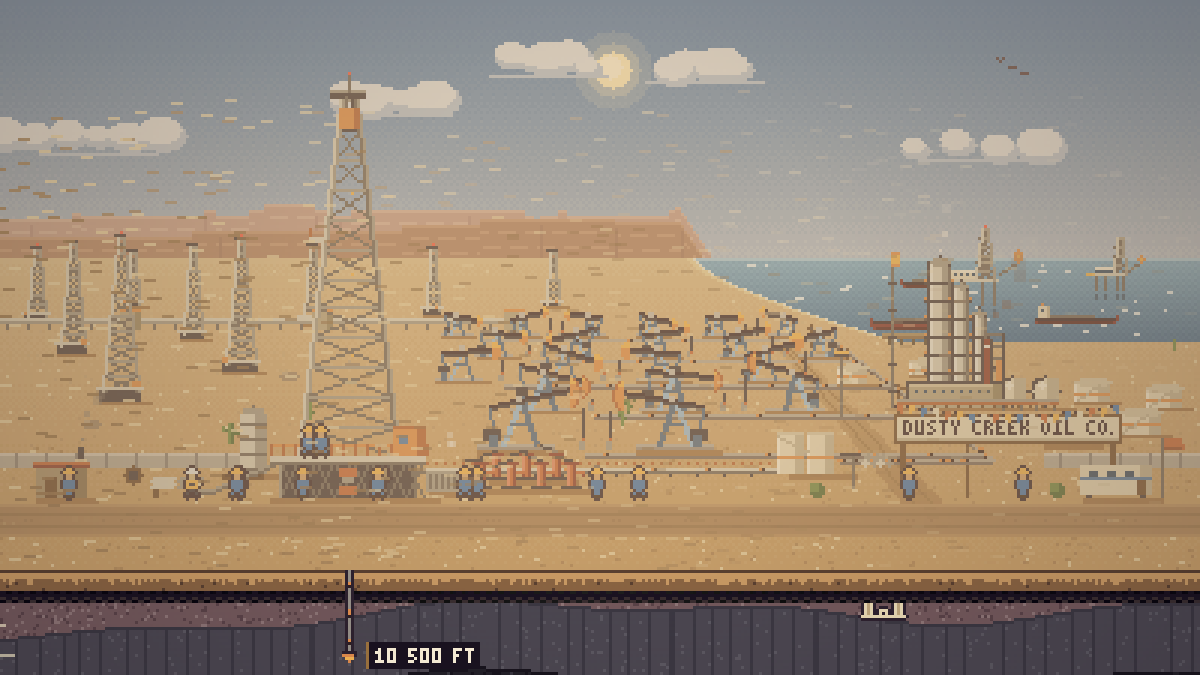
Finishing a Pomodoro sets off fireworks.
What it cost
Less than what it replaced. The previous renderer needed a WebGL library and a fallback renderer for devices without WebGL. The new one uses the browser's ordinary 2D canvas, runs everywhere, and draws the busiest possible field in under two milliseconds a frame on a laptop. The download went from 626 KB of JavaScript to 286 KB.
Looking at it properly
A renderer like this is tuned by looking, so the game has a hidden set of tools for looking. A hidden developer panel can preview the field at any stage of a career, scrub through the day, trigger a strike or a storm, and save the result as an image. The pictures of the field on this site were made with it.
Open the field and watch it through a session.